Friday, April 1, 2011

Musings of a short-lived Night Elf Hunter

During the past weeks, I have been reflecting about my journey to the land of 21st century education, of 'classrooms without walls," mobile learning, and use of technology to enhance and enrich education. Below is the (shortened) essay I wrote in November 2010 for the course Building Online Community using Social Media (BOCSM) through @One Institute, which was a turning point in my perception of online learning and social media .

"One January night of 2009, a Night Elf Hunter came to life in one of the wondrous landscapes of World of Warcraft. Tall and powerfully built, with long braids and a tight leathery outfit, the avatar looked ready to embark on her first Quest- except that she did not know what to do. Creatures around her “spoke” to her in sometimes cryptic messages, and colorful windows floated around the screen offering coins, weapons, and tools. The Elf did not even know how to move.
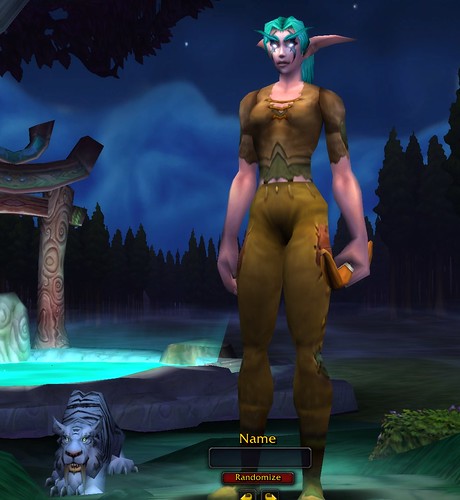
In panic, I hit the Escape button and exited the virtual world.
I had taken the offer of a ten-day free trial of WoW to understand what drove my teen son to his room for hours, neglecting school and household chores. In the beginning he would tell me about his team, scattered around the whole world. I could not grasp how he
could spend hours chatting with those faraway friends he had never met. But I also felt that he was onto something, maybe not of my liking, but something powerful that I needed to explore.
Years later, I am starting to understand.

There is a saying in Spanish: “Subir montañas hermana hombres,” which literally means “climbing mountains make men become brothers.” The idea is that people working on a common task (especially if hard and daunting) will form a community. This is achieved in many ways: we share about ourselves, compare opinions and ideas, give constructive feedback and advice, and sometimes are just plain silly and have a good laugh. We look for what is common between us and enjoy learning new things.

As many other "digital immigrants," I could not grasp that all this could be achieved online. I started to change my mind when in a previous course I watched the weekly address of the instructor- I saw her slightly tensed face before starting the recording and I knew what she was doing (looking at the countdown on the camera). I heard her sharing some facts about herself (which resonated with me). And I thought: “I could chat with this person!” Somehow, she became real.

Now, how important community is in an online class? I had some doubts in the very beginning about it- because it takes time. The past two weeks I had lots of things to do outside of this class and it was hard to find the time to roam around Ning and the Moodle site to comment, answer to others' comments, or just look at pictures and watch the videos. It was more than just completing the assignments- I was concerned about being perceived as rude if I did not get back quickly to all. I still feel that I did not make connections with everybody the way I would have liked, and I hope I can do it during the remaining days.
So I was concerned that putting the extra-load on students could be overwhelming.
Right now I feel that it is worth the extra mile. I feel very much at ease with my BOCSM teammates, and feeling at ease makes the learning experience more fun and also less stressful. I also realize that the instructor has to set the tone and find the best tools to make this possible.
Of the topics covered in class, the most essential for me to incorporate is "collaboration" as it is the one I have not really harnessed yet. I am not really clear how to design blogs and wikis so they are efficient and true:  that they are actual student contributions and not just automatic copy & paste.
How to do that? When I try to remember learning collaboration in my life, I fondly recall days spent at my friend's Maria's backyard with a group of other college students. We would sit in a circle and pound away (no study guides, no tutorials, and no web resources), book in hand, taking notes, explaining issues to each other. Maria's mom would bring us snacks, and between studies we would chat about little things. And it just dawned on me that we had such a great group together because we were a community- we shared, we felt safe with each other, and we had lots of fun together!
So the idea has come a full circle, and I can now fully embrace the idea of building a community as an essential foundation for a successful learning experience. Especially when we want collaborative learning- we need to make students feel safe and heard- and for that I will use many of the tricks learned in this class, from ice-breakers to Voicethreads.
And I think this is the most valuable lesson- the importance of building a community- that I take with me from this class.

On a November morning of 2010, “Annie” made her entrance to “Breakthrough to Cures,” a 1-day global game designed to promote awareness and global brainstorming to address degenerative neurological diseases. Sponsored by the Myelin Research Foundation, the game's no-frills structure allows players to propose solutions or name possible pitfalls, with other players being able to build upon those ideas- support, criticize, inquire, or modify. This was Annie’s second try and she knew what to do- she proposed some concrete ideas and commented on others’. Soon she and another player, “Gardener” had agreed on a framework to establish a global knowledge network and discussed ideas about how to make information accessible in remote areas of our planet. Not all exchanges were supportive- there was questioning and sometimes contradictions, but  never unpleasant. Moderators of the game were tweeting about the best ideas of the game and bloggers were identifying threads with immediate practical applications. In less than one hour, Annie felt she knew most of the gamers present. It was a fun learning experience. It was also an experience of online community building with a common purpose, just like the online courses we build or even the WoW games our children play."
How did you journey start, dear reader?


Friday, February 18, 2011

Not enough bars and a teachable moment

One of the thought processes running continuously in the back of my mind lately is how to develop critical thinking. As I mentioned in a previous post, I recently participated in a stimulating meeting about teaching strategies and assessments. Slowly I am introducing more and more active elements in my classes, and feel its positive impact as students take charge of solving problems instead of simply sitting and receiving information.
On a side note: I realize that times have a-changed. In the "old days," information was available only during class time (or from the text book), so students had no other choice that come to class and take notes. However, as information becomes more easily available by oneself  (if I put my lectures up as podcasts, theoretically the students don't really have to listen to it twice) or others, there is a higher bar set for educators. Which is, in my mind, a good thing. These days, I see more and more students glancing under the table while I lecture, which is the obvious sign that they are checking their phones. In classes where they use laptops, I know that they are reading emails etc. Do I get upset with them? I cannot really, as I do the same when I am in conferences...and I recall my college days when I would be reading under my desk. The only way I would stop is when there was something to think about, which would make me fully engaged.
So I have this physiology class where finals are approaching, and we are supposed to have a review session. With a written report due that day, I am facing students buried in their laptops or books, absolutely uninterested in discussing any topics they don't understand.
The issue of course is that they don't know that they don't understand. It is my job to provide them with problems to solve, so they can actually test their knowledge. So in a moment of inspiration I run to make copies of a case study related to the nervous system. The exam coming up is on nervous  and it goes from the basics of signaling (action potentials etc), through parts and functions of CNS and PNS, to nervous system pathologies lite. In summary, lots of material. The case study in question can be built up effectively from the chemical basics of neuron signaling to how nerves function, so I thought that would be a good way to go over the main concepts.
One of the first questions that come up is about Novocaine, a local anesthetic. I look at my students and decide to let them play. "Get your smartphones and laptops," I say. "What is the mechanism of action of Novocaine?" Some minutes pass and students are still gazing at their gadgets. "Come on, this cannot be that difficult," I comment. One of the girls looks up in clear frustration. "There is only one bar inside the room," she says. "It is too slow."
The golden opportunity appears in front of my eyes and I grab it. "All right," I answer. "Let's pretend we are in a part of the world where there is no internet. Let's think. How could a local anesthetic work?"
Students slowly inch their way through the thinking process. It is about pain, so it is a sensory pathway. A sensory receptor picks up the signal, which passes the threshold and provokes an action potential. An action potential starts with depolarization. Depolarization is provoked by opening of sodium channels. If you block the sodium channels, there is no action potential, hence, no pain signal. Novocaine is a sodium channel blocker.
It was great. I could hear the whirring of the wheels inside students' brain as they were using the concepts to explain something from real life. Along the way we covered other related concepts, made some comparisons, there were questions and answers. Most students were engaged. And I was stoked.
The second part of the course is starting in two weeks, and I am finishing preparing the syllabus with the assignments. I know that there will be more activities like that, and I know that I have to figure that out during this long weekend. It will be busy...
Enjoy the long weekend if you are in the US! And happy weekend everyone. As for me, I think I'll go for a run to clear my RAM :)

Saturday, February 12, 2011

Meeting with the Other Side (aka Humanities)

The week before classes start is usually Professional Development week. Attendance to a determined number of hours is compulsory, and when teaching at different colleges the time crunch and logistics issues can be considerable. So it happens quite often that I attend activities just because their timing suits me. And the best thing is that I always learn something, and very often it is exactly the kind of knowledge I needed (but I did not know at the time).
As an example, a couple of years ago I participated in a Camtasia training. I was just starting to think about how to improve online courses, and when trainings were offered I jumped on them, but too late. The two courses intended for beginners were full, and I had only two options left, one being Camtasia. I had to google up what podcasts were because I had no clue. To say I was hesitant of the value of that course for me is an understatement, but there I went. Big credit goes to Micah Orloff from @One Institute who was the trainer: when finished I was able to record lectures, screens, and even do fancy stuff like inserting music and transitions. It was a great jump start for my podcasting, which I offer these days for all my classes.
Last Friday I participated in a book club activity organized by the Communication Arts Department.  We were to discuss Ken Bain's book What the Best College Teachers do
Mea culpa: I had not read the book. In fact, I only remembered the meeting when the reminder popped up on my calendar. I had signed up in a panic the last day of ProfDev week, when I realized that I had one more hour to fill and no activities to go. As any other student n the digital age, I spent some time on the internet looking for summaries of the book. At some point I accepted the fact that I had not done my homework and honesty would be my best option. 
The small group that gathered on Friday belonged to the Other Side: they were all English, Communication, and Philosophy instructors. Once I admitted my sin and received absolution from the the lead, Mary, the fun part started. We had to develop overarching goals for our courses that would enhance the intrinsic motivation of students (the wording was lengthier and included the words sustained and emotional), then questions that we could return to throughout the course. Aspects such as assessments and how to make students learn from their own mistakes were discussed. The two ours passed really quickly as the participants shared their ideas and approaches. I had lots of questions that I had no time to ask, aspects of writing and critical thinking I had always been interested. One aspect that I struggle a lot is how to teach/show my students to improve their problem-solving skills. Too often I see the Google approach to problem-solving- look up the words and find the best match. his approach however has severe limitations if dealing with unusual or complex problems. I am also interested in philosophy applied to science.
At the end of the workshop I did get to talk a bit to a couple of people, and discussed scientific writing in general and some other writings in particular. I hope to establish some kind of interaction with humanities instructors- it would be a really great way to work together on materials and assessments that combine scientific method with the power of the written word. I am looking forward the next book club meeting...
Oh, and I ordered the book :-)

Sunday, February 6, 2011

Uncluttering the desk and the mind


View of my desk today Sunday morning.
There is a saying that the state of a desk reflects the state of the mind. Yup, I agree. Before embarking on a new project I would always religiously clean up my desk, and my coworkers would roll their eyes at the piles of papers discarded on the floor. For me, it is an emotional need to get rid of the old stuff and freeing mental (and desk) space for the new stuff.
I went for a 1.5 hour run after taking the picture- a bit longer than I usually do, but I needed it. It was also a demanding one, up Cowles Mountain. I like the Mesa trail from the back- it is longer and less populated than the short trail that most people know. It has gentle switchbacks and shaded parts, but the final leg is very steep. At that point, the only thought in my brain was to  keep my legs moving and my lungs from bursting. By the time I was blasting downhill my mind was clear, and I even had a good idea for a written assignment- letting the students choose a scientist from a list in the beginning of the course and have them develop a wiki? Facebook profile? Keep adding more and more information as the course advances- see how their discoveries stand up to time or how they had been changed/challenged with newer discoveries. And have them submit it as their research paper at the end of class. I am always looking for new types of writing assignments, as I like the concept of "Writing across the curriculum." This idea, of course, will take me long time to develop...maybe for the Fall semester.
Disclaimer- I read something somewhere about students developing FB profiles of famous people, so it is not really "my" idea. But I have no clue where I read it...
Anyway, the reason for my wanting to clean up my desk and my mind is that in 3 weeks I start a new course, the second part of Anatomy/Physiology. For the first part (the one I am teaching now) I had the leisure of Winter Break. These courses are 8-week accelerated courses, and if I want them to run smoothly I have to prepare them well in advance. During the break I uploaded all the materials to the course website, prepared/updated all the assignments, instructions, grading rubrics, exams, quizzes, even the extra credit assignments! Thanks to that the course basics are running on autopilot, and I have time to teach more effectively. 
Just today I read a blog post by an instructor unhappy with too much technology. Her piece was balanced and objective, but the comments were rather telling. Many of the instructors who commented were quite negative towards online instruction and interactions. Some stated that maintaining a course website was a lot of work. 
When I started teaching online I was also overwhelmed by the up-front work setting up the course. However I was struck by the fact that I had to plan so well ahead- not only the materials but also the narrative of the course. I had to state my learning goals week by week, and decide how I wanted to achieve them. Yes, it was a lot of work the first time. However once a course is prepared, it can be copied and just modified.
Personally, I think I teach much better now that I use a blended system. Because all the information is available online, I only have to address questions about them instead of wasting valuable class time going over them. Assignments are submitted electronically, which means I don't have to haul around papers (and is more green). All written assignments go through Turnitin or other plagiarism detection software. My lectures are available as powerpoints and podcasts- that allows some to lecture less and spend more time helping students doing case studies for example. I plan to adopt in the future the "inverted classroom" model...
View of my desk Sunday evening
But back to the new class. I don't have the luxury of a break this time- one class ends on Saturday and next class starts Monday. So I need to plan ahead. And there are lots of fun stuff that I need to prepare better: Better cardio and respiratory labs, more dissections, and maybe some more engaging group activities. In summary, creative work. And creative work requires an uncluttered mind. So I spent a couple of hours after the run organizing my desk. I have 3 neat stacks for the 3 courses I am teaching now, and one extra stack for articles/materials I want to read for ideas. After finishing this post (which is part of my mental clutter of the morning) I will start with the lab schedule for the course...and then read...and hopefully get creative. Dear readers, do you have suggestions about developing new, fun activities for Anatomy and Physiology?

Thursday, February 3, 2011

The importance of community in the classroom

This week the same scenario took place the first day of class in the two community colleges  I started teaching. As I arrived, students were sitting at their desks in silence. Some were checking their cell phones, others were staring into the void. After greeting them I started to unpack and get ready for class, just to become aware of the eerie silence. Somehow the opening scenes of the video of the VOST project cam to my mind. After a while, I could not take it anymore. "It is too silent here," I said. "Please turn to the person closest to you and introduce yourself. Talk about why you are in this class."
After a second the floodgates opened, and the room was filled with animated conversation as students chatted with each other. By the time class started, the temperature of the room had increased from frigid to cozy.
For a long time content delivery (transfer) was my main concern in teaching. I was used to lecturing, coming from a background where power point presentations crammed with information were the standard. Even when I had started using more active approaches, such as problem-based learning, I would still have my reservations.  I was once chastised by one peer/supervisor for "wasting my time" making students discuss case studies and the like in small groups. For a long time there was this nagging concern in the back of my mind that maybe I should not "play" in the classroom and just stick to the serious business of lecturing. 
My turning point happened last year, when taking the Building Online Community with Social Media course through @One Institute. Skeptical me first rolled her eyes at the amount of community building exercises/activities of the first week. Then, as I read the other participants' discussion board and blog postings, and watched their pictures and videos; I started to find those little things that make people connect. One participant spotted a bumper sticker on a picture I uploaded that reminded him of his hometown. Another shared my passion for figs and pomegranates (discovered also through a picture). A third was from a country I lived for many years (Sweden). And so on. On the side of the course tasks, small conversations started online. I began to feel as I knew the other participants, which meant I felt more confident to discuss topics and post my ideas. The epiphany came when I had to write an essay about community building: I realized that the best study groups I had ever had (college or work) were groups cemented by friendship and community. Study was much more efficient when we did it as a group of friends.
So these days I try to incorporate ways to make my students connect and form community as early as possible. In a face to face class that may sound easy, but it is not- students live hectic lives, they run from class to work or vice versa, often they have families to take care of or they commute long distances. Ice-breakers the first day of class and early group assignments help students find others to study with. As the days pass, I see friendships blossom in class, and I overhear conversations that reveal stronger groups. While I do not claim that this is my doing, I have noticed that giving students the chance to interact with each other and form community is very helpful. 
I have introduced a twist to a group project evaluation based on a case study recommendation, in which students complete a quiz on the questions of the case first individually, then together as the group. If the group score is higher than the average of the individual scores, then the difference is added to the latter. Most groups score higher as a group so it helps individual students. I have consistently observed that the best-collaborating groups (subjectively judged by their cohesion in class, time spent together before class, or just by their interactions) have better group scores. 
I have never been a group cheerleader or one of those parents who are great at devising and directing kids' activities...so sometimes I am a bit out of my comfort zone. But I do know that it is worth to spend the extra time and effort to build community in the classroom from the very beginning. And it is more fun too :)

Friday, January 28, 2011

Egypt, social media, and my memories of the Maleconazo in Cuba

This week I started two new courses, one of them at a new college, with all the nervousness that a new scenario brings. So far so good. I did some of the usual stuff, but also started a group project around a case study, promoted a fun discussion board in order to build community, and became a fire-breathing dragon regarding lab safety rules. I had lots of thoughts and ideas and was happily ruminating on them, planning to spend some time today reading my favorite tweets to get even more good ideas. 
Instead, I am glued to the Twitter feed and alternating with Al-Jazeera, watching the Egyptian situation unfold. I watch the police, the armored vehicles, the protesters on the street. And I am having flashbacks to 1994.
Rather recently I came across a Cuba-related question in Quora about the Special Period. I made a short comment on it, unable to put in words all the emotions that the question and the answers provoked in me. While some of the economical solutions taken by the Cuban government at the time may sound progressive and beneficial to the planet, the truth is that Cubans suffered terribly during those years. Organic farming and alternative means of transportation may sound good on the paper or for visitors, but in the reality there were years of grueling misery, a struggle to find enough food, to get to work and back, to be able to do household chores with massive blackouts and lack of most everyday objects from soap to matches. One of the answers referred to Wikipedia, and I read the entry both in Spanish (dry and conspicuously subdued) and in English, where there were two sections labeled as not neutral: "Famine" and the "August 5 uprising" aka Maleconazo.
I was there.
I lived close by.
I know it happened. 
I was ready to join the crowd on the street chanting "Freedom" but my family convinced me otherwise. Which was a good idea. A neighbor, a teenager boy, went down out of curiosity and was taken by the police. His mother raced to mobilize all the contacts she knew and managed to get him out of jail. The kid returned days later, shaken and fearful. He told stories of cells crammed with people who just happened to be close by, some beaten bloody for no reason. 
I know it happened, but I could not tell anyone. All the phones went dead.
Late at night, armored vehicles, many of them, came down San Lazaro street. During the next days you could spot people carrying weapons on the campus of the University of Havana. 
Everybody was afraid. And nobody talked about what happened. It was never mentioned in the news. In fact, the news only talked about demonstrations in favor of the government. In a way, it was only real for those who saw it, those who were there.
If we only had internet. If we only had Twitter or any other way to let others know. Watching the armored vehicles circling around in Cairo, watching the demonstrators, I feel such a sadness and also joy. I know comparisons cannot be drawn. But when I watch the Egyptian demonstrators, I cannot help but to think of the Cubans of August 1994. 
This time, the demonstrators know they are not alone. They know the world is watching. They feel connected to others, and they know that, whatever happens, it will not disappear under a deep blanket of silence and lies. 
I am thinking of you.

Tuesday, January 18, 2011

No woman no cry: my teaching journey

I was much impressed by Michelle's blog posting about the personal events that brought a change to her teaching. At the end, she encourages educators to share their journey and experiences. Her post speaks strongly to me. And if there is one evidence of the power of online communities and learning networks is the fact that I feel much closer to Michelle and others out there (whom I only know through online connections such as Twitter), than to many people I have personally met. 
When I look back to my own journey, I realize that it was my thirst for communication and personal interaction that brought me to teaching. I had the usual academic career path- a bit slower and longer than usual because I had to jump through a couple of countries before I started my postdoc at a renowned institution. But I was a researcher and I knew my gig. I worked at the bench, ran my gels, and cultured the cells. I could sit for hours at the microscope searching for the perfectly stained cells. I walked the walk and talked the talk. I enjoyed it. Besides, that was what I was supposed to do. 
Postdoc time was the first time when I was not teaching. I had to teach almost since I finished college- informally first: explain the new tech or the summer student what to do. Then more formally: there were courses to organize, students to supervise, college lectures. At some point I HAD to teach- my Ph.D. program required 20% teaching load. How I managed to do that in Swedish is still a bit mind-boggling to me. But there were always students in my life until I started my postdoc.
I missed them so much. Yes, teaching was time-consuming and sometimes tiresome, and students could be annoying and demanding. But they asked the most interesting questions, they kept me updated and open-minded; and then there were those golden a-ha moments for which we educators live.
I felt lonely in the lab. Pure research is a solitary work, in spite of being surrounded by other people. I looked for teaching opportunities, and soon I had classes in the evenings. I was energized. I met with people I could have never met before in my elite research-postdoc science circle. I have my doubts if my research, supported by grants and published, has actually changed anybody's life. Teaching, I knew I touched people's lives and sometimes even made a difference. 
As my fellowship came to an end, I applied for jobs and got one in the biotech industry. For 2 years, I worked in cancer drug research. I learned a lot- not so much about research, but  organization and protocol writing, quality control, and a more systematic approach to science. 
I still felt lonely. Work was intense and often stressful, and time management was critical. There was not much time to do anything else than work, except some short and usually superficial water-cooler conversation. Besides, I was not really sure that my work was saving anybody's life.
Once settled at work, I went back to evening teaching. Two or three times per week, I would leave work in a rush to get to class, arriving home after 10 pm. I saw less and less of my teenage son. The extra money was nice, but was it really worth?
Then one day, it dawned on me: I was happier and more energized  late afternoon stepping into the classroom than I was coming to work early in the morning. I felt useful and worthy. 
It took me months to make the decision to resign. I was not alone. I had other people's examples in front of me, who defied conventions and turned their back on the rat race in order to pursue their dreams. I saw them happier and more fulfilled than many others who were doing the "right thing."
This was almost 4 years ago. Since then, I have been happier professionally than ever. I am fortunate enough to teach different classes and be involved in many different projects. I have time to pursue other interests. I have more time to spend with my family. I have time to read all the science articles I never had the time to peruse before, and follow topics out of my specialty. 
My latest revelation has been, thanks to Michelle and others, the incredible potential of social media and online community building. For the past 3 months I have been exploring lots of new tools (getting almost burned in the process) in order to improve the learning experience for my students and me. If there is something that I enjoy in my classes is how much I learn from my students. And I am doing baby-steps sharing my journey...Twitter feeds...blog posts....all new uncharted territory but SO inspiring. 
(I spent quite a time thinking on an appropriate title. I wrote up several but deleted them. My playlist then just started to play Bob- and I had my right title. It has been a tough journey sometimes. But it has been a joyful one: "Everything 's gonna be alright, everything 's gonna be alright")