Tuesday, June 21, 2011

Professor Site vs RateMyProfessors: great idea!

Feline Dr. Jekyll and Mr. Hyde
Last night, after wrapping up my Microbiology class I stopped to chat to the other instructor teaching the same course (we switch lecture and lab rooms). With the class winding down (this is finals' week) we shared some of the frustrations  with a small but usually rather vocal group of students. These are the students who do not do very well in class and approach us with comments such as "I have never done so bad in any other class,"  ask for extra assignments (while they obviously cannot cope with the current ones), or bluntly declare "I NEED to get a B in this class." While there are many reasons for their low performance, the majority of these students are simply not ready for science courses, even non-major ones, but somehow the system let them in. This is a big problem and I do not intend to talk about it now.
The point is, there are always some students who are not doing well in my class. I have tried many things:
  • emailing my students weeks before class starts with "heads-ups", 
  • sending the syllabus, 
  • directing them to podcasts of lectures so they can start listening ahead, 
  • having a "pre-test" the first week so they can have a feeling of what is the level of knowledge required in the class, 
  • asking them to write reflections on their learning, 
  • sometimes almost forcing them to discuss with me in person

...and still, some of them fail, drop, or slowly disappear along the lines. And then one reads the comments in RateMyProfessors and gets depressed...
This morning while going through the Twitterfeed, I stopped to read this interesting blog post by Scott MacLeod about the use of social media by educators, or in fact, some controversies surrounding it. The controversies are the same as always: how people become addicted to the new media and shun personal relationships, family time etc etc etc. For me, Twitter is a constant source of professional development through a continuous conversation/brainstorming with other educators. This conversation most often goes one-way, but sometimes it becomes an engaging conversation. 
So I was pondering this morning how to address new students more effectively, allowing to "see me" before class in some online form, be able to figure out in advance if they are ready and if they have the skills/tools they need for the class. I was just trying to decide between a VoiceThread conversation, a FB group, or some other kind of online community, when Michelle Pacansky-Brock's tweet appeared announcing a Google Site template for a "Professor Site" that students can access before class. Basically, a Dr. Jekyll to match RateMyProfessor's Mr. Hyde. I leaned back with a big smile. While building sites from scratch has its appeal, it is also a big job, and I confess I am very happy to have this template available. One less problem to tackle... 
And I found out thanks to my Twitter Learning Network..."nuff said"  :)

Wednesday, June 8, 2011

Why oh why...

... is it so hard for me to blog about the professional stuff?
I teach and I think a lot about teaching. As I teach science, I think a lot about science and science education. I am slowly implementing more and more the flipped classroom idea- less lecturing, more dynamic stuff. I do case studies routinely, run experiments in class, force my students to do different things- lately it has been wikis and blogs. I am experimenting with Softchalk. So I do work the teaching stuff, but to write about it is a different ballgame. I came to science teaching from science, not from teaching. So there are a lot of buzzwords that I am not familiar with. It reminds me a bit of people who are good with the Bible and quote verses of it, which is very impressive (especially if you are not that well-versed in the Bible like me).
The other day I visited a postdoc friend at a research institute. It was lunchtime and I overheard the conversation at the neighboring table. "Stem cells...differentiation...upregulate." All good science lingo. So thick that I am glad am not there anymore. When I teach about stem cells to my undergrads I will say "upregulate" and then add "increase the expression" right away. If the looks are still blank, I will add "more molecules will be produced." It took me some time to learn not to use a language that creates a barrier. 
Is it the same with education and particularly, technology applied to education? I feel so. Take this example from an otherwise excellent educational blog: "In spite of the growing support for the social-cultural, situated, social constructivist, distributed, hermeneutic and dilogical nature of learning and cognition; educational, business and cultural practices remain firmly rooted in a paradigm of individualism.." Huh
I believe that if I dedicated enough time and effort I could speak that way too- but I don't think I want to do that. Waste of my time, in my opinion. I wish only I had the courage of WorstProfessorEver to say so bluntly. 
So going back to the beginning, why is it so hard for me to blog about the teaching stuff? I spent the morning in class, first in a Micro lab that I adapted to an accelerated class of 32 and a slightly frazzled technician (she is great but she is new, and the more experience tech just quit). To my amazement, things worked and students seemed to grasp what they were doing. Then there was a quiz, the usual pouting after the quiz, a lecture on epidemiology and a short practice with case studies. By then the class had wound down to less than 20. We were sitting tired in the classroom, discussing rice water diarrheas and nosocomial infections.  They were asking questions and commenting, telling horror stories from their families and workplaces. They were getting it. And I felt good. But it does not seem complicated enough to post about it. 

Thursday, June 2, 2011

AVP National Gathering 2011

The New Zealand AVP song
I spent most of the last weekend in Belmont CA, more specifically at the Notre Dame de Namur University campus attending the National Gathering of the Alternatives to Violence Project
AVP has been an important part of my life since 2005, when I had my first workshop. I have been facilitating for a couple of years now, and am seriously considering becoming what it used to be a "lead" but now is named "team coordinator." For me, it is the next logical step. AVP has many flavors: it originated in prisons in order to decrease violence and provide inmates with tools to explore the roots of violence and how to handle it; it has been used in community settings to help people deal with conflict resolution and relationships, and it has been used for trauma healing and reconciliation in war-savaged countries such as Rwanda. 
I have facilitated community workshops, but my main focus lately has been prison workshops in Spanish. In California, the number of Spanish language programs has been cut drastically with all the budget cuts. And AVP, as a volunteer program, does not cost to the prison system. 
Doing AVP takes time, but it is so incredibly enriching...and besides everything else is a great reality check. There is nothing like stepping out of a prison building to feel the afternoon sun and be able to leave through the gates.  Makes one appreciate freedom and life. 
Being in a gathering like this is like being with a close-knit family. As an all-volunteer organization, there is no financial incentive doing AVP: AVPers do it because they believe in it. It entails sacrifice in time and resources, so no wonder the majority of AVPers, at least in the US, are well-to-do retired people. One of the major current challenges for AVP is its lack of diversity, and there were many discussions addressing it. 
My two agenda items for the meeting were the situation of Spanish language workshops and promoting social media within AVP. For the first I was part of a breakout session that brought together a group of Spanish-speaking facilitators, most of them working in Latin America, and a minority here in the States. I had met some of them and communicated with others through email and skype, and it was great to meet all of them in person. The fact that the next International Gathering takes place in Guatemala highlights the growing influence of Hispanic countries in AVP.
The next item did not feel as successful. I had a strong deja vu of my conversations with educators about the possibilities of online teaching and the use of social media...not a lot of interest. Or skepticism. I guess I was too optimistic expecting enthusiasm.  I should try to make a list about the information one can find on Twitter similar to the one in a recent post by Scott McLeod, but directed to the non-violence/restorative justice/peace crowd. 
Posada de Belen, site of the International Gathering in
Guatemala, October 2-8 2011
Other than that, it was a great event. Being an educator and an AVP facilitator overlaps in many aspects, one of them the possibility of making a difference and changing lives. During the Summer break I already have two workshops planned, and if my Fall schedule does not get populated soon I am seriously thinking on spending some time in Latin America around the International Gathering...

Monday, May 23, 2011

The dark side

I just bought a MacBook Pro. Believe me, this is Breaking News. I have been a PC person for more than 20 years. Or I should say a PC owner. The first computer I worked with was actually a Mac, and over the years I had to use them for a number of applications in Flow Cytometry or in labs where that was the standard. So I know how to use them, and have consistently appreciated how everything artsy seems to be better for Macs than for PCs.  And they are cool and sleek.
So why did I not buy one before?
Two simple reasons: the cost and the fear of incompatibility.
The first is rather self-explanatory. Say what you want, but Apple computers are more expensive than PCs. Until the last minute before I hit the Checkout button, every comparison, feature by feature, was cheaper for PCs. My baby here is in fact refurbished, which made it less outrageous. But still.
The other comes with my experiences in the past. I still remember when working in groups where some people were PC and others Mac, the nightmare it was to make all documents and pictures visible to all and look alike. To the day of today, some students will send their projects in certain formats that I cannot open, and they turn to be Mac formats. 
Last but not least, I dislike Apple's proprietary policies and closed systems. 
So why did I do it now?
My main reason is the need for a robust small but powerful travel laptop. I spend a lot of time on the road and on flights, and just got tired of either hauling my 17'' Dell around or using the old 15'' Fujitsu whose battery lasted only a couple of hours. The latter's display finally died, which prompted my quest.
Second, I have several friends who have switched to Macs and plainly drool about them. Most of those tend also to like photography, and Apple seems to be the standard among photographers and graphic artists. While I am not a photographer, I do like tinkering with Photoshop. I also do some simple podcasting and video editing, and was bummed by how few PC programs are available in comparison with Mac ones. The podcasting software I use, Profcast, has a minimalistic interphase for PC compared to the full-blown sophistication of the Apple version. 
Third, I realize that the compatibility issues are not as bad as before. I am still considering if I want to install BootCamp to use Windows 7 in parallel. So far all the programs that I use have their Apple versions. My trusty old Dell has been promoted to home computer in case I get an acute case of PCitis. 
My final reason was my growing reliance on working in the cloud. I have started to write my new documents as google documents instead of Office. That way I keep them online, I may download a version just in case, but can work anywhere from any computer. I use Dropbox to keep my most important files synched to both computers and my Droid. I do not feel encased in the Apple or any other system.
For the record, I had a hard look at iPads and Chromebooks before the decision. I have been wooed by the esthetics of the iPad, but I realized that they lacked many of the functions I needed, not to mention it seems to be a much more closed system. As for Chromebooks, I do need a hard drive as there are programs that I cannot run in the cloud, and some of my files are just too big. 
My new toy, a 13'' MPB with 4 Gb RAM and an i7 processor arrived 2 days ago. I connected to the internet within 5 minutes. I installed Chrome and visited my websites. Then I downloaded a trial for Adobe CS5 and copied my files to the computer. Also downloaded Office and a bunch of other programs that I use, installed Skype, Dropbox, Profcast, and Evernote. As for tonight, I am perfectly set within the boundaries of my computer. Next week, before I leave for a conference, I need to figure out printing and what I need to connect to projectors and the like. 
I hope everything works as well as my wireless keyboard. When I connected the USB gizmo, a message popped up "your device needs to be identified." I sighed, readying myself for a long session of reading instructions and searching for drivers. Instead, I was instructed to press down 2 keys on the keyboard and that was enough to identify it. I sat wide eyed for a while. This was just too easy.
So far so good. 
Update one day later: I connected to the printer...and it printed. Just like that. OMG.


Sunday, May 8, 2011

Virome thoughts after bodyboarding

Since I started reading about the incredible diversity of the microbiome (and trying to keep up at least with those living in and on the human body) I was dreading the coming of the virome. Meaning, the coming of the point where I could no longer blissfully ignore the omnipresence of those pesky organisms, such as I have been ignoring for decades the existence of neutrinos and subatomic particles. It is strange, considering that my postdoc project was all about LCMV, the lymphocytic choriomeningitis virus. But for me it was more a tool, a way to produce the diabetes model where to study the "big boys," the cells of the immune system.

An incredibly informative book came out recently, Metagenomics of the Human Body, with Chapter 4 dedicated to the human virome. I sighed. And read. 
"Whenever microbes (bacteria and archaea) are present, their viruses will be found." Such a simple statement, indeed. But in a way, it is an eye-opener. Of course they will be. We are all connected. Those incredibly intricate webs of parasites within parasites, are just examples of the rule. 
"Compared with environmental viral communities, the diversity of the human virome is low," state Haynes and Rohwer in said chapter. There are only 1500 viral genotypes in a healthy human virome, in contrast to the estimated 10 thousand-1 million genotypes present in 1 kg of marine sediment. 
Wow.
Somehow that number still haunted me this morning, while trying to catch some of the not-so-great waves at Tourmaline beach. I have had some sinus issues the past weeks but decided that salt water ablutions (even if involuntarily) would do me good by flushing my mucous membranes. Of course I was thinking of the effect on the pesky Streptococci and the like lurking in my throat and nearby. But what about their viruses? And the viruses of the ocean? At the end of the session I was wondering if anybody had compared the microbiome of people who spend time in the ocean regularly with the land-dwellers.
Just for fun ran the search "surfer" and "microbiome" through several databases, no match, of course. Google came back with pages dedicated to surfing scientists. I do have to mention undergrad Amanda Shore. She is studying the effect of zinc on the intestinal microbiota! Why is that interesting for me, because zinc is the only supplement I take, especially when I have infections- it is known to stimulate the immune system. 
But I have gone off-topic. As mentioned before, I need to get more acquainted with the virome. 
I pick up my weekly Science- one of the few that I like to read in paper form, and what the word virophage jumps at me. Ok so those are phages that prey on viruses. The Sputnik virophage, discovered in 2008, is the first example of a satellite virus, which multiplies inside a cell (in this case amoeba) already infected with another (giant) virus. The particular article that I saw was published in PNAS and reports a virophage that by infecting viruses that infect algae, is able to regulate the bloom of the algae in several lakes. 
Another marine article that caught my eye was a recent one in Microbe magazine about coral reefs and their microbes. The coral holobiont, a collection of microbes associated to coral reefs (and yes, there are viruses there also), varies according to seasonal and biogeographic patterns, and can also be influenced by pollution. 
Neat.
Time to go and rinse my wetsuit...

Thursday, May 5, 2011

Open book exams, redeemed, but left behind

I have an ongoing struggle regarding open book exams. For a long time I did not even consider them. Then, when I started teaching some very intensive, material-heavy classes (such as anatomy/physiology combos), I realized that I could not base the assessment on students' ability to recall details that are necessary in order to do the actual analysis/problem-solving. In real life all of us look up data in electronic databases. So I started trying out open book and/or open note final exams.
I have learned several facts along the way:
1. it is much harder to develop good open book exams. There must be a balance between the different skills evaluated: finding the information quickly, applying the concepts, making deep analyses, and writing in a concise and clear manner. I usually have questions in all ranges, where essay questions demanding analysis and good writing provide the points for an A grade. 
2. One has to avoid answers quickly found through the index. I learned the hard way when in an exam where I asked for an example of structure and function at different levels (tissue, organ etc), the overwhelming majority of the students wrote about the stomach. I was surprised because we had not covered digestive system in that particular class, but students later pointed out that stomach was an example of structure function-relationship provided in the book, which could be found by looking in the index. In a recent exam I asked for examples of homeostatic regulation, and clearly stated which ones could not be used (after carefully perusing the book for clues). 
3. They take time. Closed-book exams take usually between 1-2 hours, maybe more if there are slow/thorough students. For the latest one I had to tell the 4-6 students remaining that it was time to go after 4 hours. Some of them had not even started the essay questions. Those are the times when I wonder about hidden disabilities. 
4. They work. When I finish preparing the open book exams I often think that they are too easy to pass. I include on purpose those more demanding questions for the highest grade, but in my mind there is no way anybody could flunk the exam when the book is available. I am consistently proved wrong. There are students who fail the open book exams. True, they tend to be the weakest students, those who had usually failed the other exams. Or the uninterested ones, who sit in the back behind their laptops and never show up for review sessions. But the fact that they fail even with the material available tells me that they lack basic study skills. And that is a scary thought when it is about students who have been through years of college.
5. They tell me more about the students than any other kind of exam. I learn a lot about my students reading their exams. Some of them write in a sloppy way but showing 'common sense" and experience. They know what the issue is, but have difficulty translating it to the language of science. They cut through the verbiage but miss the chance to show deep understanding. Others look up words and copy paragraphs from the book related to the question, but never really answering it. It is common, but especially disappointing when coming from students who have done "great" in other exams. 
6. They are bygone. More and more students have ebooks instead of "real" books. This time it was only 2 students, and I was able to get them books, but I was aware they were in disadvantage, as they could not use their highlights and notes. On the other hand I could not have them bring their laptops and do word searches (or even sneak into the internet). 
7. Open note it is. I have had open note exams, and they actually feel better in the sense that note preparation itself is a skill, and students learn just by preparing them. However, I have to think ahead really well in setting the parameters of the notes allowed. Also, I will have to actually check if the students comply with those parameters. Policing is not my cup of tea, but in this case it is part of being fair. Ugh.
So it is kind of anticlimactic that after evaluating my latest and in my opinion, so far my best open book exam developed, I decided not to do it again. However, for the next installment of the course I may do an open book quiz early on. That way I could gauge earlier the level of class and identify those students who may need extra attention. Or just to get them know better. 
What are your experiences with open book exams, dear readers? 

Friday, April 1, 2011

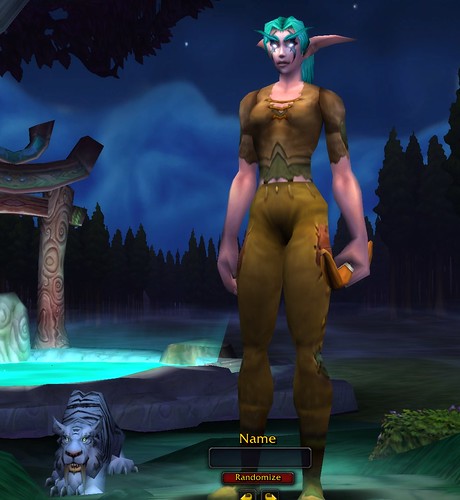
Musings of a short-lived Night Elf Hunter

During the past weeks, I have been reflecting about my journey to the land of 21st century education, of 'classrooms without walls," mobile learning, and use of technology to enhance and enrich education. Below is the (shortened) essay I wrote in November 2010 for the course Building Online Community using Social Media (BOCSM) through @One Institute, which was a turning point in my perception of online learning and social media .

"One January night of 2009, a Night Elf Hunter came to life in one of the wondrous landscapes of World of Warcraft. Tall and powerfully built, with long braids and a tight leathery outfit, the avatar looked ready to embark on her first Quest- except that she did not know what to do. Creatures around her “spoke” to her in sometimes cryptic messages, and colorful windows floated around the screen offering coins, weapons, and tools. The Elf did not even know how to move.

In panic, I hit the Escape button and exited the virtual world.
I had taken the offer of a ten-day free trial of WoW to understand what drove my teen son to his room for hours, neglecting school and household chores. In the beginning he would tell me about his team, scattered around the whole world. I could not grasp how he
could spend hours chatting with those faraway friends he had never met. But I also felt that he was onto something, maybe not of my liking, but something powerful that I needed to explore.
Years later, I am starting to understand.

There is a saying in Spanish: “Subir montañas hermana hombres,” which literally means “climbing mountains make men become brothers.” The idea is that people working on a common task (especially if hard and daunting) will form a community. This is achieved in many ways: we share about ourselves, compare opinions and ideas, give constructive feedback and advice, and sometimes are just plain silly and have a good laugh. We look for what is common between us and enjoy learning new things.

As many other "digital immigrants," I could not grasp that all this could be achieved online. I started to change my mind when in a previous course I watched the weekly address of the instructor- I saw her slightly tensed face before starting the recording and I knew what she was doing (looking at the countdown on the camera). I heard her sharing some facts about herself (which resonated with me). And I thought: “I could chat with this person!” Somehow, she became real.

Now, how important community is in an online class? I had some doubts in the very beginning about it- because it takes time. The past two weeks I had lots of things to do outside of this class and it was hard to find the time to roam around Ning and the Moodle site to comment, answer to others' comments, or just look at pictures and watch the videos. It was more than just completing the assignments- I was concerned about being perceived as rude if I did not get back quickly to all. I still feel that I did not make connections with everybody the way I would have liked, and I hope I can do it during the remaining days.
So I was concerned that putting the extra-load on students could be overwhelming.
Right now I feel that it is worth the extra mile. I feel very much at ease with my BOCSM teammates, and feeling at ease makes the learning experience more fun and also less stressful. I also realize that the instructor has to set the tone and find the best tools to make this possible.
Of the topics covered in class, the most essential for me to incorporate is "collaboration" as it is the one I have not really harnessed yet. I am not really clear how to design blogs and wikis so they are efficient and true:  that they are actual student contributions and not just automatic copy & paste.
How to do that? When I try to remember learning collaboration in my life, I fondly recall days spent at my friend's Maria's backyard with a group of other college students. We would sit in a circle and pound away (no study guides, no tutorials, and no web resources), book in hand, taking notes, explaining issues to each other. Maria's mom would bring us snacks, and between studies we would chat about little things. And it just dawned on me that we had such a great group together because we were a community- we shared, we felt safe with each other, and we had lots of fun together!
So the idea has come a full circle, and I can now fully embrace the idea of building a community as an essential foundation for a successful learning experience. Especially when we want collaborative learning- we need to make students feel safe and heard- and for that I will use many of the tricks learned in this class, from ice-breakers to Voicethreads.
And I think this is the most valuable lesson- the importance of building a community- that I take with me from this class.

On a November morning of 2010, “Annie” made her entrance to “Breakthrough to Cures,” a 1-day global game designed to promote awareness and global brainstorming to address degenerative neurological diseases. Sponsored by the Myelin Research Foundation, the game's no-frills structure allows players to propose solutions or name possible pitfalls, with other players being able to build upon those ideas- support, criticize, inquire, or modify. This was Annie’s second try and she knew what to do- she proposed some concrete ideas and commented on others’. Soon she and another player, “Gardener” had agreed on a framework to establish a global knowledge network and discussed ideas about how to make information accessible in remote areas of our planet. Not all exchanges were supportive- there was questioning and sometimes contradictions, but  never unpleasant. Moderators of the game were tweeting about the best ideas of the game and bloggers were identifying threads with immediate practical applications. In less than one hour, Annie felt she knew most of the gamers present. It was a fun learning experience. It was also an experience of online community building with a common purpose, just like the online courses we build or even the WoW games our children play."
How did you journey start, dear reader?